
Recognition of Training in Interventional Neuroradiology (INR)
The Parent Bodies (ANZSNR, ANZAN and NSA) have established a new framework for the recognition of training in Interventional Neuroradiology (INR) across Australia and New Zealand.
As part of this transition, the former Conjoint Committee for Recognition of Training in Interventional Neuroradiology (CCINR), established in 2014, as of 01 July 2026, has been replaced by the Recognition of Training in Interventional Neuroradiology Standards Working Group (INR-SWG).
The INR-SWG operates as an advisory body, supporting the safe provision of INR by developing, monitoring and reviewing the Standards for Recognition of Training in Interventional Neuroradiology. While the INR-SWG provides expert feedback and recommendations, final decisions regarding practitioner recognition remain the responsibility of each respective Parent Body.
A joint INR Register will be maintained to list approved interventional neuroradiologists, neurosurgeons and neurologists who meet the agreed standards for training, experience and ongoing competency. The register will include practitioners’ names, primary practice locations and certification periods.
Applications for inclusion on the INR Register are submitted to the relevant Parent Body, which assesses applicants within its specialty area. Eligible applications may then undergo a de-identified advisory review by the INR-SWG before a final determination is made by the relevant Parent Body.
Approved practitioners will be included on the INR Register for a period of three years, after which recertification is required.
The INR Register and supporting information, including the Standards and links to application processes, will be available at inrregister.org.au
Recognition on the INR Register will be accepted as equivalent to former CCINR recognition for Medicare Benefits Schedule purposes and other external recognition processes.
INR
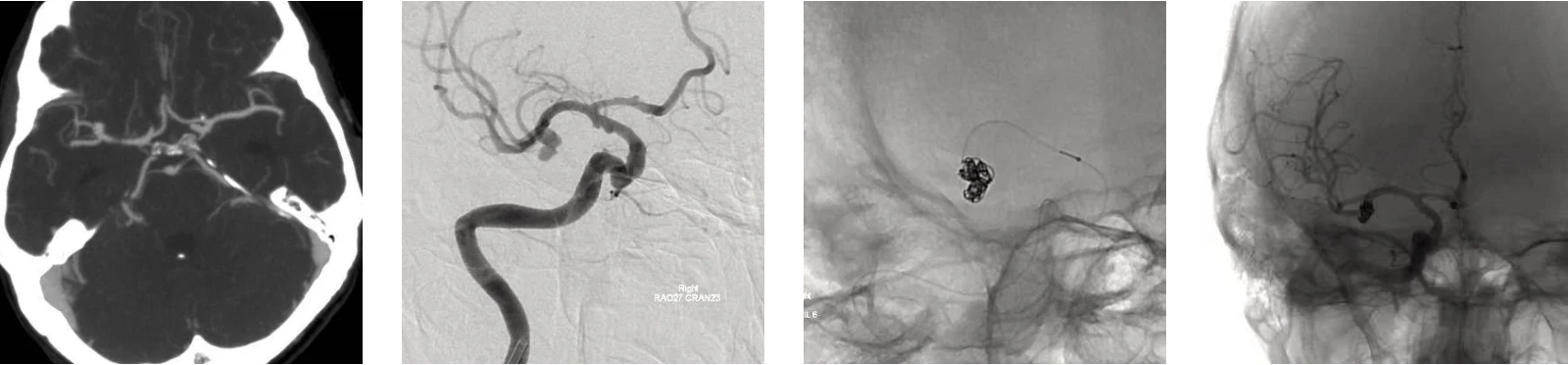
INR is the term used in Australia and New Zealand to describe medical sub specialists who use image-based minimally invasive techniques to diagnose and treat intracranial, spinal and head and neck diseases. INR stands for interventional neuroradiologist, but as the subspeciality includes neurosurgeons and neurologists as well as radiologists, the contraction INR is usually preferred. In other countries other terms may be favoured, such as NI (Neurointerventionist). INR is also used to refer to the practice as well as the practitioner (interventional neuroradiology). There are a number of synonyms used elsewhere (Endovascular Surgical Neuroradiology [ECN], Minimally Invasive Neurosurgical Therapy [MINT], Neurointerventional Surgery [NIS]) but they all refer to the same subspecialty practice. For the purposes of the CCINR guidelines the term INR is taken to be synonymous with terms used elsewhere to describe both this work and the appropriately trained practitioners who practice in this subspecialty.
The INR Standards
The INR standards ("Standards for Recognition of Training in Interventional Neuroradiology") are available to view on this site. These standards have been developed by expert specialists currently performing neuro interventional procedures in Australia and New Zealand. They draw on evidence for best practice, patient safety and care from around the world, and from guidelines from other leading international specialist societies - for example the UEMS Standards of Practice in Interventional Neuroradiology, backed by the European Society of Minimally Invasive Neurological Therapy (ESMINT). They have been fully ratified by ANZSNR, ANZAN and the NSA.
The Standards set out what is required in order for an individual to apply to be recognised as an INR in Australia and New Zealand. The formal training and experience needed to become an INR is described, as well as the requirements to maintain competency of practice.
The standards indicate what information an INR will be asked to supply to their parent body in order to be included on the Register of INR practitioners, and also the requirements for maintenance of competency to practice. INR practitioners who meet the requirements of the Standards will be placed on the Register of INR practitioners for three years, after which they will need to re apply.
The application process for recognition of INR Training can be accessed via the Application page.